
Wi-Health Project Background
Project Objectives
The Wi-Health project is aiming to develop an autonomous, wireless and self powered sensor network that will give early warning of the need for repairs before they become very expensive while providing long term and continuous structural health monitoring (SHM) of bridges with total area coverage using a minimal number of network nodes and sensors. The aim is to improve structural defect detection at an early stage before the defects have caused serious damage, so greatly reducing the costs of repairing damage.
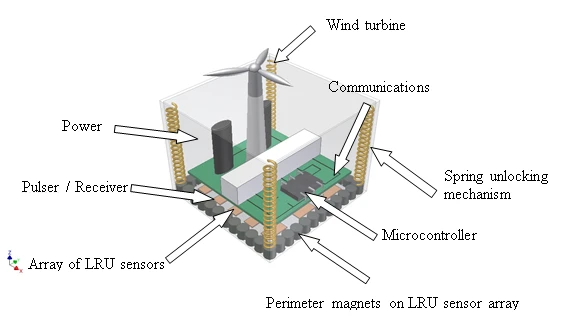
The Technical Project Objectives are as follows:
- To develop monitoring techniques based on the combination of Long Range Ultrasonics (LRU) and Acoustic Emission (AE)
- Development of “intelligent nodes” for reliable operation in harsh environments
- To develop “Renewable” energy harvesting system - Autonomously powered nodes: i.e. the use of an energy harvesting module on each node to permanently replenish the node’s battery on-board capacitor power supply, exploiting the regularly windy environment experienced by almost all large bridges
- To develop a wireless communication system (LAN) which allow two way data transmission between all nodes and the computer base station - Wireless communication of all acoustic data to a common computer base station using signal relays from node to node to allow long distance communication with minimum transmitter power requirements
-
To develop an innovative embedded software that is able to drive the structural health monitoring system for:
- defect identification incorporating the use of trend analysis
- data processing
